Before and After Post Structures for Founder LinkedIn Content
Founders earn trust by showing how their beliefs changed, not just what they learned.
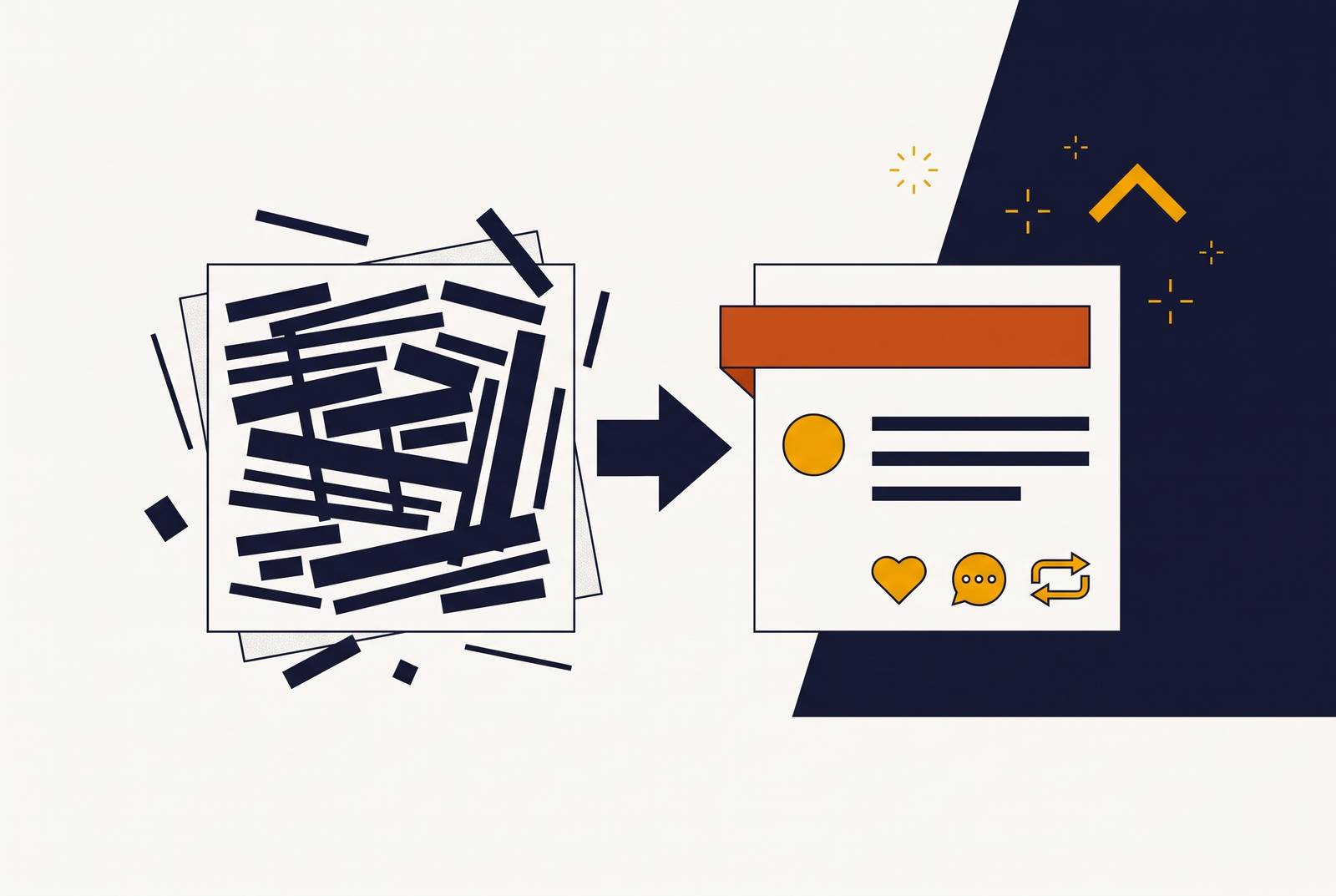
Before-and-after posts show how a founder’s judgment has changed, something tips and company updates on LinkedIn often leave out. Their strength is the visible path from a recognizable problem, through a real decision, to a concrete result.
Why the before/after structure outperforms other post formats for founders on LinkedIn
Founders often post what they have learned, tips, and company updates. Those formats tell readers what someone thinks or what a business has done, but they can leave out the experience behind the claim. A transformation story opens that missing middle. It shows the original belief, the decision that challenged it, and what followed. Readers get something they can judge.
That difference explains why before-and-after is one of the strongest structures for founder content. Trust grows when a founder can show that a belief met reality, lost the argument, and changed. The story also gives readers a reason to stay. Someone who recognizes what the founder struggled with wants to know how it ended.
That pull fits LinkedIn’s focus on showing expertise and getting people to read more deeply. Specific founder experience supplies evidence that a generic tip list often lacks, while the unresolved gap between before and after encourages continued reading. The format also spans three strong categories of founder content, including lessons from direct experience, specific tactical takes, and transparent behind-the-scenes accounts. These are not separate costumes for the same announcement. Each shows a different part of how the founder works, decides, and learns.
The four-part anatomy of a before/after post that earns trust rather than just attention
The before state describes a situation the intended reader has lived. For a founder writing the post, the task is to name the problem precisely enough to create recognition within the first two lines. Struggling with growth is too broad to do that work. Spending the entire marketing budget on ads and getting three inbound leads a month gives the reader a situation to picture. Readers need to recognize the problem before they care how it turned out.
The turning point is the decision that made change possible. Do not hide it behind a phrase about changing the approach. In the same illustrative story, the actual choice is to kill the ads budget and start posting on LinkedIn three times a week about what the business is building. An external event may prompt the change, but the useful part is the founder’s response, rather than luck, timing, or a helpful market breeze.
The after state makes the result concrete and observable. It need not be revenue. A changed customer relationship, internal process, or belief can work if readers can understand what is different. When the result is numerical, name its magnitude and timeframe. Precision gives the reader something to assess, although a tidy number alone does not prove what caused it.
The transferable lesson explains what the reader can take from the experience. End with one principle. For the visibility story, the reframe is that showing the work can be part of building. Without it, readers may enjoy the transformation without understanding what it changes for them.
Where to find the raw material — extracting transformation stories from real founder experience
The raw material is usually in choices founders have already made and stopped thinking about. To bring it back, use a voice memo to answer three questions. What belief from six months ago no longer holds? What moment changed that belief? What happened next? Together, the answers give the draft its starting point, hinge, and destination before polished language gets a chance to interfere.
In hiring, think back to a belief about great candidates that one person proved wrong. In product work, examine a feature built for the wrong reason or a customer conversation that changed the roadmap. In fundraising or sales, revisit a failed pitch, the adjustment that followed, and what closed the next one. Ordinary decisions often contain the best material.
The temptation is to dismiss these stories as too obvious or too personal. Yet corporate polish can remove the very detail that makes an account credible. Adam Robinson of RB2B posted brutally honest stories about being an entrepreneur, and a post in which he shared a cease-and-desist letter brought in 1,600 qualified leads. A specific event can give readers something a generic entrepreneurial lesson cannot.
Guillaume Moubeche of lemlist took the systematic route by documenting milestones and failures. He built hundreds of thousands of followers and grew the business substantially from a minimal initial investment. Building in public creates an archive of decisions as they happen, rather than forcing the founder to reconstruct every story later. Record the change while its awkward details are still available.
Writing the hook — why the first line of a before/after post does most of the work
LinkedIn shows only the first one or two lines before readers reach “see more.” So the opening must get readers to open the post before they know how it ends. Treat it as a conversion point. LinkedIn weighs the decision to expand a post as a quality signal, but the reader’s immediate question is simpler. What will opening this post reveal?
For the marketing story, compare a weak opening about a tough period for growth with a specific one about spending the entire marketing budget on ads and getting three inbound leads a month. Both refer to the same problem. Only the second reveals the mismatch between effort and return. It gives the target reader a recognizable frustration and leaves the outcome unresolved.
A named reversal offers another route, pairing an old belief with the conversation that overturned it. Alternatively, put the counterintuitive lesson first, then walk backward through the experience that supports it. In the visibility example, that means opening with the idea that showing the work belongs inside the work. The story then has a claim to prove. Neither construction needs theatrical suspense.
Loose talk about hard times, company cheerleading, and questions that could apply to almost anyone waste the space. They make readers wait to learn what is at stake in the story. Keep the hook tied to the change the post goes on to show. Otherwise, the opening earns a click that the rest of the post cannot repay.
Formatting decisions that make a before/after post readable as a scan
LinkedIn readers scan a post before they decide to read it all. So a before-and-after post should show its shape at a three-second glance, with short paragraphs of one to three lines. White space is part of the structure. It separates ideas so the reader can see a progression. A wall of text should not become the post’s second problem to solve.
For the marketing example, the opening paragraph would establish the budget and disappointing lead count. The decision to stop the ads would stand alone, marking the hinge. A following paragraph would present the actual result, with a shorter sentence giving the arrival some weight. The final paragraph would contain the principle.
Keep bullets out of the narrative because they signal a tip post. The turning point can have a line to itself for emphasis, but it should be clear without decoration. If the post references an external resource, place the link in the first comment rather than the body, where it can suppress organic reach. For transformations with several stages, a document carousel is another viable form. Its swipe mechanic gives the sequence a natural pace.
How the before/after post fits into a broader content sequence that builds pipeline, not just reach
A founder can publish an affecting story and attract people who admire the founder but will never buy. That objection is valid. Before-and-after content builds the trust that makes later decision-making content effective. Applause is pleasant, but it is not a purchase order.
To connect that trust to a commercial outcome, give different posts different jobs. Hot takes and strong opinions bring new readers into the feed. Transformation stories then show those readers that the founder’s judgment comes from real experience. Client success case studies and direct calls to action give readers who already trust the founder a reason to think about the offer. Asking one emotional story to handle all three jobs confuses reach, trust, and conversion.
Patrick Campbell of ProfitWell illustrates the longer horizon of credibility-building. He shared proprietary SaaS metrics over a decade and built toward a nine-figure exit to Paddle. The before-and-after of his own business decisions formed part of the content that established his judgment over years. The business outcome should not be mistaken for proof that one storytelling format caused it.
Posting several times a week gives these roles room to work together. Before-and-after is sustainable within that rhythm because founder decisions keep supplying material. If stories draw attention without relevant inbound interest, examine the transferable lesson and the audience reflected in the before state. A buyer should see a problem they know as well as a story they enjoy. The correction is often sharper targeting at the start.
What ghostwriting adds to the before/after process — and where the ethical line sits
Ghostwriting can make this process practical without making it fictitious. The division of labor is straightforward. The founder supplies the experience, judgment, and evidence, while the writer extracts the story and shapes its delivery. A call or voice memo can follow the four components in order, giving the writer a transcript to work from. The structure becomes an interview tool as well as a publishing format.
The ethical boundary requires each claim to have a specific founder statement behind it, whether in a clip, voice memo, or Slack message. If the writer cannot point to that source, the post does not publish. The founder’s practical test is equally direct. Could every opinion in the post be defended in a live conversation?
That test requires founders to own the substance. A skilled ghostwriter can uncover the raw decision the founder omitted because it felt unprofessional, obvious, or uncomfortable. Inventing an experience is a different service entirely. Better sentence rhythm does not turn fabrication into ghostwriting.
Katelyn Bourgoin offers a model of specificity. She applied buyer psychology to her own content, built a large audience, and grew the Why We Buy newsletter to tens of thousands of subscribers, generating over $1M revenue in 2024. Her case shows how what she teaches connects to what she has done herself. Her case is not a reason to assume how the writing was produced.
For founders choosing a ghostwriting partner, look for practitioner credibility, a documented extraction process, and a willingness to work as a strategic partner. The writer should be able to pin down the decision in a loose account without changing the facts to make the ending better. That restraint protects the format’s central promise. The transformation earns trust because it happened.